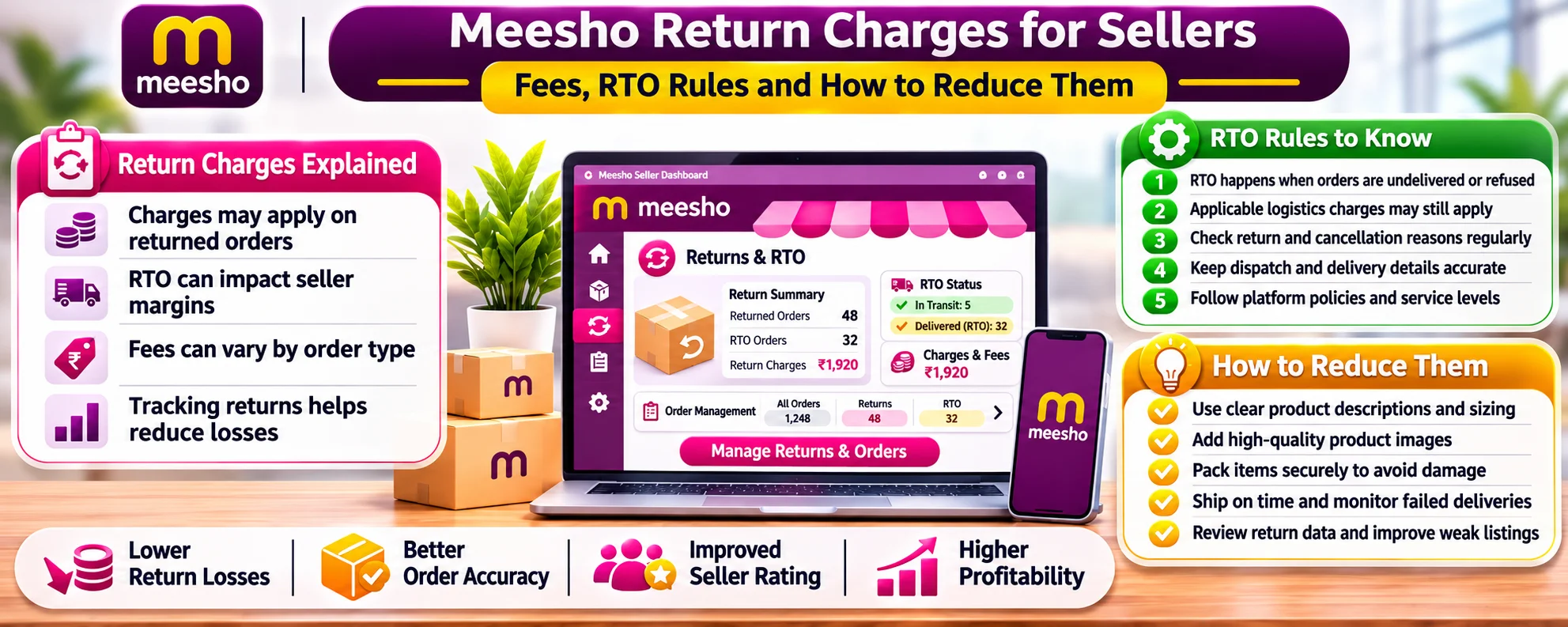
Meesho is known for zero commission, so many new sellers assume their margins are safe. Then the first settlement arrives with deductions they did not expect, and most of them come from returns. This guide explains how Meesho return charges work, when you pay them, and how to protect your profit.
What is the Meesho return policy for sellers?
Customers get 7 days from the delivery date to request a return or exchange, and most categories follow a “no questions asked” return policy. This is good for buyer trust, but it also means the return rate in your category directly affects your earnings.
Who pays the return shipping fee on Meesho?
If a customer starts a return, the seller bears the return shipping fee, and you can see it in the product details. Check this fee before you finalize your price, not after the first return arrives.
How are Meesho return charges calculated?
The fee mainly depends on weight. The return shipping fee is based on the weight of the shipment. Meesho’s shipping charges in general depend on the packed product weight, the delivery zone (local, regional or national) and reverse logistics, and sellers cannot edit these charges manually.
This is why accurate weight entry matters. If you enter a lower weight to look cheaper, the return fee can be calculated on a heavier slab and cost you more.
Return vs RTO: what is the difference?
- Customer return: The buyer received the product and sent it back. You pay the return shipping fee.
- RTO (Return to Origin): The parcel was never delivered and came back to you. Under Meesho’s policy, the seller is not charged any additional shipping fee for an undelivered RTO, and in some exceptional cases return shipping fees can be waived.
Always read your settlement report carefully, since rules and exceptions can change.
How return charges affect your settlement
Return charges are not billed separately. They are taken out of your payout. Settlement equals the selling price minus shipping charges, minus the platform fee, minus any return or RTO charges, and these are applied after the returned item reaches the seller.
Accounting guides for e-commerce sellers also advise that Meesho manages reverse logistics and deducts return-related charges from your settlement, so you should reconcile them line by line in the settlement report.
What to do if the return charge looks wrong
Weight errors are the most common cause of disputes. Meesho’s support flow has a section for return shipping fee issues: go to Supplier Panel > Support > Order return shipping charge fee issue. Keep these ready:
- Photos of the packed product on a scale
- The weight you entered in the listing
- The order ID and the deduction shown in the settlement report
Raise the complaint soon after the deduction, because older cases are harder to get corrected.
7 ways to reduce Meesho returns
- Write accurate titles and descriptions. Wrong expectations cause most returns.
- Use real photos. Show the actual colour, texture and size.
- Add a size chart for clothing and footwear.
- Enter the correct weight so fees are predictable.
- Use strong packaging to avoid damage in transit.
- Do quality checks before dispatch. Catch defects yourself.
- Track return reasons and fix or delist products with repeated complaints.
Frequently Asked Questions
Do I have to pay return charges on Meesho?
Yes. If the customer initiates a return, the seller bears the return shipping fee.
How many days does a customer have to return a product?
Customers have 7 days from the delivery date.
Are RTO charges the same as return charges?
No. For an undelivered RTO, the seller is not charged any additional shipping fee. Customer returns are charged.
Where can I see return charges?
In the product details and in the settlement report in your Supplier Panel.
Can I dispute a wrong return charge?
Yes, through the Supplier Panel support section for return shipping fee issues.
Conclusion
Zero commission does not mean zero cost. Returns are the biggest hidden expense for Meesho sellers. Price with return charges in mind, enter correct weights, and review every settlement. Keep your return rate low and your profit will grow.